The proof an overseas buyer checks before the first email
A buyer in Sydney cannot walk your floor before the first order, so they look for the next best thing. Most export sites give them nothing. Here is what they check, in order.
貿
By TradeBoost Labs · 14 September 2026 Buyers · 4 min read
A purchasing manager in Sydney has found your page. The product looks right. The price looks right. Now they have to decide whether to email a company on the other side of the world that they have never heard of, and their instinct is to look for reasons not to.
They cannot visit your factory before the first order. So they look for the next best thing, and they look in a fairly predictable order. This is that order, and what your site needs at each step.
One: who are these people?
The first thing a buyer looks for is a human. An About page with real names, real faces and real roles. The owner. The export manager they will actually deal with. How long the company has existed and where it is. Google’s own guidance on trust asks the same question of every site: is it clear who is behind the content, and would a reader trust it for a purchasing decision?3
Most export sites have an About page that says “founded in 2008, 200 employees, 20,000 square metres” and a stock photo of a handshake. That is not a person. A buyer wants to know who will answer their email.
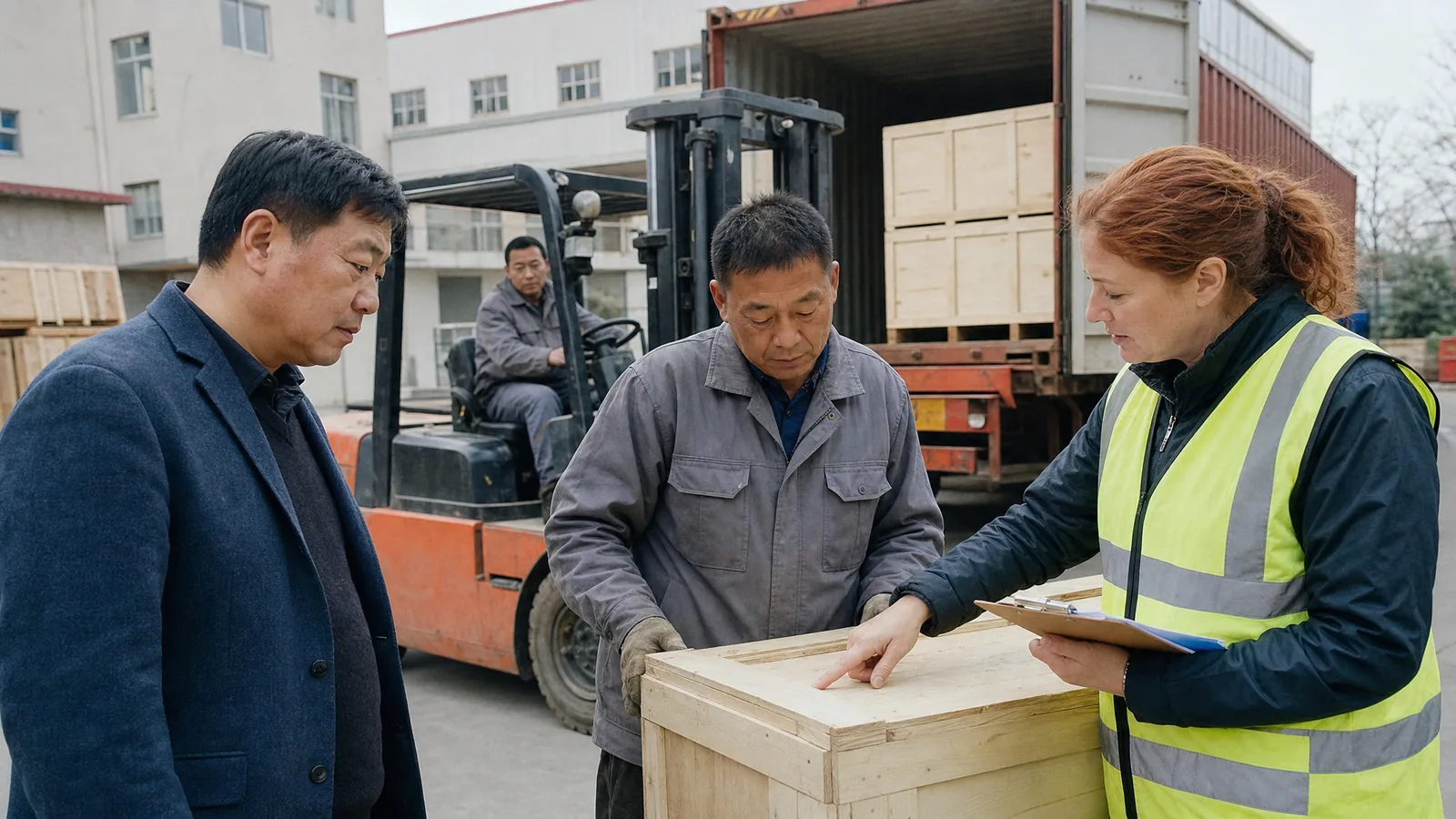
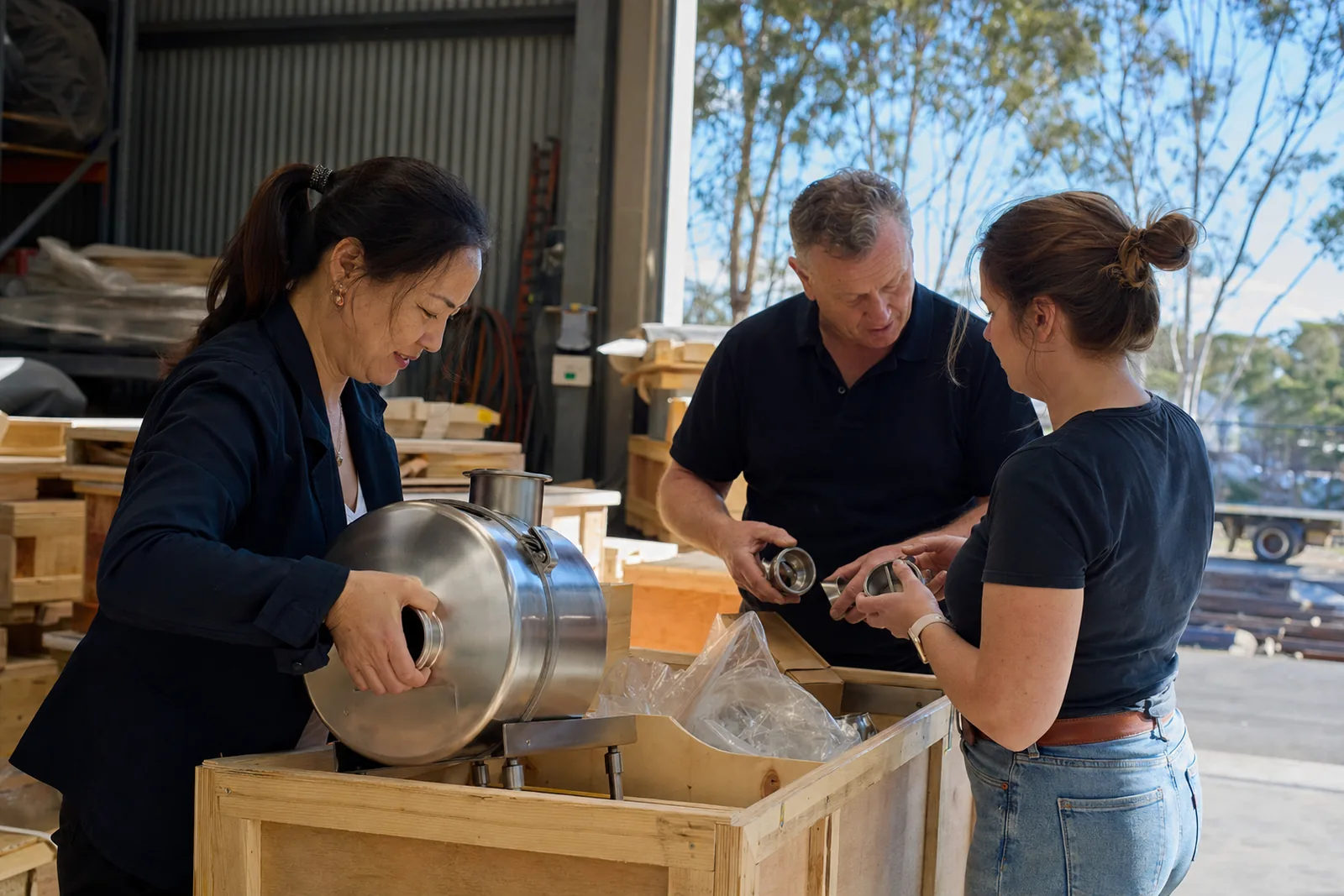
Two: is this a real factory?
Photographs of the real line, the real finished product and the real team, taken at your premises. Not the rendered image from the catalogue, not the stock photo of a generic warehouse. A Western buyer has seen a thousand stock photos and treats them as a warning sign. A slightly imperfect photo of your actual welding bay is worth more than a perfect one of somebody else’s.
What reads as a risk
Stock photos of handshakes and warehouses
"Quality and service" with no specifics
No names, no faces
Certifications mentioned but not shown
No reviews anywhere
A Google listing that disagrees with the site
What reads as safe
Photographs of your actual line and team
Real numbers: years, capacity, lead times
Named people with roles and photos
Certificates shown, with what each means for the buyer
Reviews from real customers, on the site and on Google
A complete Google Business Profile that matches
Three: has anyone else bought from them?
Reviews. This is the step most factories skip entirely, and it is the one a buyer weighs most. A review from a distributor who has bought three containers and had them arrive on time says more than any page you could write.
Two rules. Every review must be real. Invented reviews destroy trust the moment a buyer senses them, and they usually do. Ask. Most factories have dozens of satisfied customers who have never been asked for a review because nobody set up a way to ask. A simple system that requests a review after each delivery, one customer at a time, produces a steady stream within weeks. Google encourages exactly this, and explains how to share a review link so customers can leave one in a minute.1
Reviews from Chinese customers count. Present them in English with the original beside, and add the overseas ones as they come.
0reviews on most factory websites, the biggest single gap a buyer notices
1request per delivery is enough to start a steady flow
2places they need to be: your site and your Google listing
Four: what do they hold?
Certifications, shown not mentioned. ISO 9001 almost everywhere. CE for Europe. UL for North America. The audits that large buyers require. Each one on the page as an image of the certificate, with a sentence about what it means for the buyer in their market: “CE marked, so it clears European customs without a second inspection.” A buyer who recognises the certificate stops worrying about the thing it certifies.
Five: does everything agree?
The last check is consistency. The buyer searches your company name on Google and sees your Google Business Profile: name, address, photos, reviews. If it is empty, or the address differs from the website, or the photos are different again, the doubt comes back. A complete, verified profile that matches the site closes the loop.2
People real names, faces and roles on the About page and the contact page.
Factory photographs of the actual line, product and team.
Reviews real, collected steadily, shown on the site and on Google.
Certifications shown as certificates, explained per market.
Consistency a complete Google listing that agrees with the website.
The proof does the selling
When the five are in place, something changes in the enquiry. The buyer has already checked you. They write with a question about lead time, not with “please send company profile”. They are warmer, faster, and further along. That is the difference between a lead and an introduction, and it is why we treat proof as part of the site, not an afterthought.
The one-line version
Before a buyer emails a supplier abroad, they look for people, a real factory, reviews, certificates and a Google listing that agrees. Give them all five and the first email is a buying question, not a doubt.
Questions, answered
Our customers are in China. Do their reviews help overseas?
Yes. A real review from a real customer is proof wherever it comes from. Present it in English with the original alongside. Then ask your first overseas customers as they come, so the set grows in the buyer's own language.
Can we write reviews ourselves to get started?
No. Never. Invented reviews are the fastest way to destroy the trust you are trying to build, and buyers spot them. Most factories have plenty of happy customers who have simply never been asked. Ask them.
Which certifications matter most?
It depends on the market and product: ISO 9001 almost everywhere, CE for Europe, UL for North America, and the audits large buyers require. Show what you hold and explain what each means to the buyer, in their language.
Do we need professional photographs?
Real photographs matter more than professional ones. A clear phone photo of your actual line, your actual team and your actual finished product beats a stock image every time. A photographer helps; a stock library hurts.
What about our Google Business Profile?
It is the first thing many buyers see when they search your company name, and it should agree with the website: same name, address, photos and reviews. Google's own help pages explain how to collect reviews there.
貿
About TradeBoost Labs
TradeBoost Labs is the export practice of Boostable, a Melbourne digital marketing agency. We build the English website and every page and post a product needs, so factories and trading companies get found by overseas buyers, and we work with them in Chinese.
Tell us what you make and where you want to sell. We come back with a plan: the searches your buyers use, the pages you are missing, what the site needs, and what it costs. No charge, no obligation, in Chinese or English.